



Dental Implants in Hawker
Dental implants are an excellent tooth replacement option instead of getting dentures. The treatment can also be used to replace single missing teeth.
Dental Implants in Hawker
Dental implants are an excellent tooth replacement option instead of getting dentures. The treatment can also be used to replace single missing teeth.
Are you tired of hiding your smile due to missing teeth?
Broken, missing, or otherwise damaged teeth negatively impact your life in a variety of ways.
Importantly, damaged or missing teeth can also negatively impact your oral health. Dental implants can help improve your teeth, so you smile more and maintain your oral health. At your first consultation, our dentists will assess your mouth and suggest the most suitable alternative that fits within your smile goals and financial budget.
What are dental implants?
Implants are a two-part system that consists of a biocompatible, artificial ‘root’ and a ‘tooth’ anchored on top of it. The implant itself serves as the root, which permanently integrates into the jawbone and supports the surrounding bone tissues.
Otherwise, most people experience bone shrinkage after a tooth is lost. After the implant is completely integrated, we can anchor a crown or other fixed restoration on top of it.
Implants can also work in pairs to support multi-tooth restorations. They’re unique in that they are one of the only tooth replacements that do not rely on adjacent teeth for stability.
Dental implants usually have three distinct parts:
Implant: An artificial device that serves as a type of root for artificial teeth.
Abutment: A permanent metal post that holds a tooth or set of teeth in place.
Crown: The part of the tooth that's visible whenever you open your mouth or smile.

Types of Dental Implants
There are three common types of dental implants that are available, all of which are dependent on your individual needs and the existing health of your remaining teeth and gums.
Single Implant Crowns

Individual teeth can easily be replaced with a single implant and a custom porcelain crown. They can be a more effective alternative to a traditional bridge, which requires cutting down adjacent teeth to support it. The supporting teeth become more susceptible to caries, and may eventually be lost too.
A dental implant not only preserves bone and gum tissues but also avoids cutting down neighboring teeth, allowing them to often last much longer.
Implant Supported Dentures

Either a fixed denture or removable overdenture can be attached to as few as four implants. During your consultation, we will discuss what future goals you have for your smile as well as any concerns that we may notice.
Implant Supported Dentures help provide a simple and retentive solution for those who wish to improve their chewing ability, along with a better quality of life.
Together, we will create a care plan that outlines the phases of surgery, recovery and restoration.
Multi-tooth Implant BrIdges
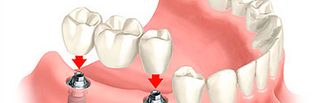
To replace a few teeth at one time, as little as two implants can support a three or four-unit (tooth) dental bridge.
When a few adjacent teeth are missing or badly damaged, multiple dental implants may be placed to support a dental bridge.
This alternative avoids the hassle involved with having partial removable dentures. It makes the use of metallic clasps unnecessary, resulting in better aesthetics, and causes no harm to adjacent teeth.
The result is a more convenient, fixed solution that enhances your quality of life, while also keeping your teeth healthy.

What to Expect During Treatment
Dental implants involve several steps to ensure a successful outcome meaning you will require multiple visits to your dentist. In the event of infections, tooth decay, or gum disease, you'll need treatment before tooth implant surgery can proceed.

If you permanently lose a tooth, it can cause further deterioration of your oral health. For example, tooth loss leads to loss of bone in the jaw, which may cause the face to look sunken. Additionally, getting a dental implant replacement will help you to continue eating as normal, and it will fill any gaps in your smile. This is why it’s a good idea to have a dental implant.
Other options include dentures and bridges. However, traditional dentures and bridges fit over the gums and jawbone but do not attach to it. Because dental implants are surrounded by the natural jawbone and gum tissue, they're often preferred over dentures and tooth-supported bridges since they stimulate new bone growth. This is especially the case when your teeth are weak, or when previous disease to the ligaments and jawbone has occurred.
We understand the importance of a healthy smile and the impact it can have on your overall well-being. Dental implants provide a permanent and natural-looking solution for missing teeth, restoring your oral function.
How long is the recovery time?
How long is the recovery time?
Each procedure that you undergo for your dental implants will take between 30 minutes and a few hours. After surgery, it's common to experience some swelling, bruising, or minor pain. Your dentist will prescribe antibiotics before surgery to ward off infection. Depending on the complexity of your case, you may have to take some time off work to recover. You may also need pain medication to help ease your discomfort. Depending on the type of implant you receive, your jawbone and gums will heal fully within a couple of months.
Speak to a dentist about dental implants
If you are missing one or more teeth or your lower denture doesn't fit properly, dental implants may be a good option for you. However, only a qualified dental professional can make that determination. Your health, and the condition of your teeth, gums, and jawbone all play a part in the decision process. If you think that dental implants may be the right option for you, or if you want to learn more about them, please contact us to schedule an appointment. Our friendly, professional staff will answer all of your questions and address any concerns that you have about the procedure.

Contact Hawker Dental Today
Find out more about what your surgery will entail, associated costs and the processes involved by booking a consultation at Hawker Dental.
Frequently asked questions
The cost of a dental implant can vary quite dramatically depending on a number of factors, such as if you require more than one implant, the type of dental implant required (for example, All-on-4 dental implants) or even the type of materials used.
During the procedure, you shouldn’t feel any pain as your dentist or oral surgeon will apply anaesthetic. In the days following each procedure you may feel some tenderness or pain, which can be managed with over-the-counter pain medication.
Yes, dental implants are usually a good option for your oral health. Speak to your dentist about whether they would be suitable for you.
As with natural teeth, it's important to properly care for your dental implants to avoid issues. That means thoroughly brushing your teeth and rinsing out your mouth to remove debris and plaque. You'll also want to continue getting regular dental check-ups. If you neglect your dental hygiene after you've received dental implants, plaque and gum infections can occur because they're bonded with the jawbone and gum tissues.
Dental implants are made to last, so technically speaking, they should last a lifetime. Regular check ups and proper care will ensure their longevity. If anything, you may need a new crown after 10-15 years if your existing one begins to wear down or crack.
Your dentist will advise you on whether or not you are a good candidate for dental implants.
Generally speaking, children and teens are too young for implants as their bones are still developing, smokers are advised to quit if they want an implant because the habit can cause bad outcomes with the healing process, and those who don’t take good care of their teeth may also not be good candidates as you will need to look after your oral health for the implant to work.
Additionally, those in advanced age may not be advised to have implants, as they may not heal as well as required.
Each procedure takes anywhere from 30 minutes to 2-3 hours, depending on what’s needed.
Dental implants require minor surgeries, which means there are some risks involved. These include; infection, sinus problems, injury, or nerve damage. Although these are not the norm, it is best to speak to your dentist about the risks involved with your specific case.